
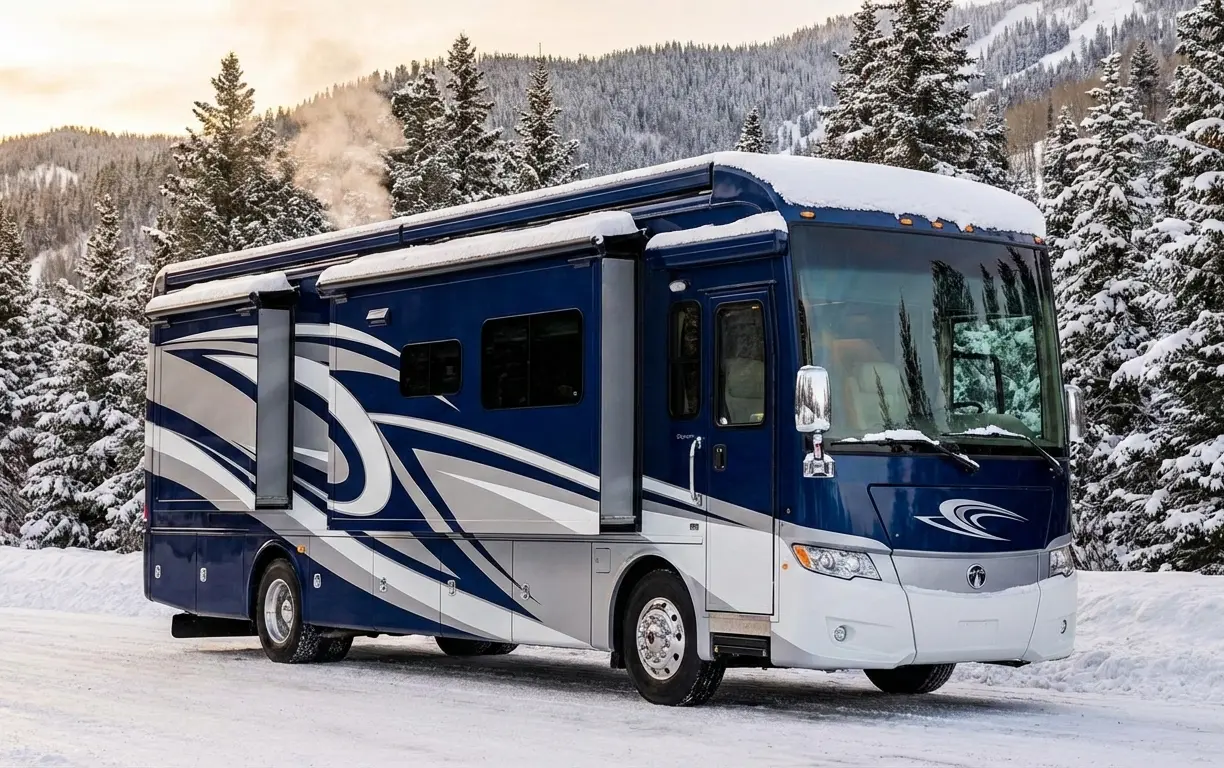
As the leaves turn and temperatures drop in Northeast Kansas, RV owners know it’s time to prepare for the harsh winter ahead. With freezing conditions common in areas like Topeka, Lawrence, and Ozawkie, proper RV winterization is essential to avoid costly damage from frozen pipes, battery failure, or moisture buildup. At Lawrence RV Center, we’ve helped countless RV enthusiasts safeguard their vehicles for over a decade. In this guide, we’ll walk you through a comprehensive RV winterizing checklist to ensure your motorhome, fifth-wheel, or travel trailer stays in top shape until spring. Whether you’re a seasoned RVer or new to the lifestyle, following these steps can save you time, money, and headaches.
Why Winterize Your RV in Kansas?
Kansas winters can bring sub-zero temperatures, heavy snow, and fluctuating weather that wreak havoc on your RV’s systems. Without proper preparation, water lines can freeze and burst, leading to expensive repairs. Mold from trapped moisture or pest infestations can also turn your RV into a nightmare come spring. Winterizing protects your investment, maintains resale value, and ensures a smooth de-winterization process. According to experts, draining your water system is the most critical step to prevent warping and leaks. By taking a few hours now, you’ll enjoy peace of mind all season long.
Step-by-Step RV Winterizing Checklist
Follow this detailed checklist to winterize your RV effectively. Always consult your owner’s manual for model-specific instructions, as variations exist between brands like Winnebago, Forest River, or Jayco.
1. Drain All Water Tanks and Lines
Start by emptying your freshwater tank, gray water tank, and black water tank at a designated dump station. Open all faucets, including the shower and toilet, to drain residual water. Don’t forget low-point drains and the water heater—remove the anode rod or drain plug to fully empty it. This prevents freezing and cracking in Kansas’ cold snaps.
2. Bypass the Water Heater
Switch your water heater to bypass mode to avoid filling it with antifreeze unnecessarily. This step is crucial for efficiency and cost savings.
3. Add RV Antifreeze to the Plumbing System
Use non-toxic RV antifreeze (pink variety) to protect pipes. Connect a winterizing kit to your water pump, then run the antifreeze through all lines by opening each faucet until it runs pink. Include the toilet, shower, and any exterior outlets. Experts recommend 1-2 gallons for most RVs. Avoid using automotive antifreeze, as it’s toxic.
4. Clean and Protect the Interior
Thoroughly clean your RV’s interior to remove food crumbs and prevent pests. Empty cabinets, fridge, and pantry. Use moisture absorbers like DampRid to combat humidity and mold. Prop open fridge and freezer doors for airflow.
5. Service the Battery and Electrical System
Remove batteries and store them in a warm, dry place on a trickle charger to maintain charge. If leaving them in, disconnect and cover terminals. Check for corrosion and clean as needed.
6. Inspect and Seal the Exterior
Wash and wax the exterior to protect against salt and grime. Inspect the roof for cracks or tears in seals—reseal with RV-approved caulk. Cover vents, windows, and seams with breathable tape to keep out rodents and insects. Tire covers shield against UV damage and cracking.
7. Prepare the Chassis and Tires
Inflate tires to the recommended PSI and consider placing them on blocks to avoid flat spots. Lubricate jacks, slides, and hinges. For motorized RVs, change oil and top off fluids.
8. Cover Your RV
Use a breathable RV cover to protect from snow, ice, and debris. Avoid plastic tarps, as they trap moisture leading to mold.
9. Final Checks
- Turn off propane tanks and appliances.
- Close all vents and windows.
- Set mouse traps or use natural repellents like peppermint oil.
- Document your process with photos for easy de-winterization in spring.
For a printable version of this checklist, download similar guides from reliable sources.
Additional RV Winterization Tips for Kansas Owners
- Combine Methods for Best Protection: Use compressed air to blow out lines before adding antifreeze for thorough coverage.
- Storage Options: If storing outdoors, choose a level spot away from trees. Indoor storage at facilities near Topeka or Lawrence is ideal.
- Professional Help: If you’re unsure about any step, especially plumbing, bring your RV to experts. DIY mistakes can lead to thousands in repairs.
- De-Winterization Reminder: In spring, flush systems thoroughly and sanitize tanks.
Ready to Winterize? Let Lawrence RV Center Help
Winterizing your RV doesn’t have to be overwhelming. At Lawrence RV Center in Ozawkie, KS, our certified technicians offer full winterization services, including inspections and antifreeze applications, starting at affordable rates. Serving Topeka, Lawrence, Perry Lake, and surrounding areas, we’re your local RV experts. Don’t risk damage this winter—schedule your appointment today!
Call us at 913-999-8441 or visit lawrencervcenter.com for more RV maintenance tips and services. Safe travels, and see you on the road next season!